400-181-1680
Leave Your Message

China Top 10 Concrete Needle Manufacturers?

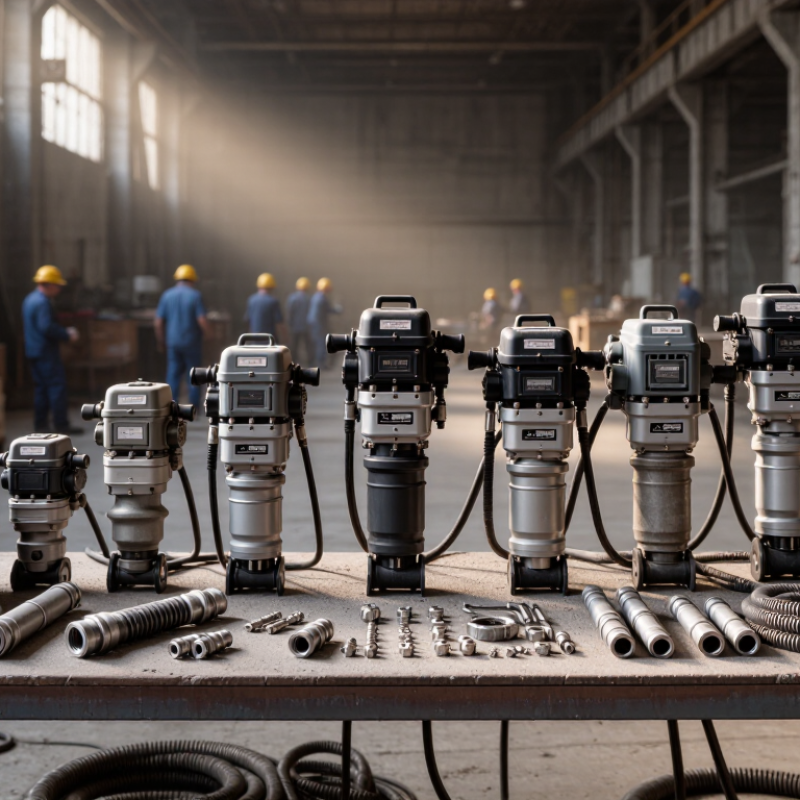
Choosing reliable equipment suppliers requires more than scanning product catalogs. A Concrete Needle must deliver steady vibration, withstand dusty job sites, and fit the intended concrete placement method. In China, manufacturers range from specialized factories to broad construction-equipment exporters. Their product quality, testing depth, and service capabilities can differ considerably.

This guide introduces ten notable Chinese Concrete Needle manufacturers for contractors, distributors, and purchasing teams. The comparison considers motor performance, needle diameter, vibration frequency, shaft construction, power options, production experience, and after-sales support. Practical details matter. A reinforced hose, sealed switch, and balanced handle can reduce fatigue during long pours. Spare parts availability also deserves attention.

No ranking is perfect.

Supplier claims should be verified through technical datasheets, factory records, sample testing, and customer references. Certifications can support confidence, but they do not replace hands-on inspection. Buyers should confirm voltage, plug standards, warranty terms, minimum order quantities, and delivery schedules before signing agreements. Some companies may present strong export figures while offering limited customization. Others may have modest websites but dependable engineering teams. That contrast is easy to miss.

The manufacturers discussed here are assessed from a practical and evidence-focused perspective. The goal is not to praise every supplier equally. It is to help readers identify suitable partners for different construction environments, budgets, and service expectations. Product performance may vary by model and production batch, so independent verification remains essential. A careful decision begins with clear specifications and realistic site conditions.
China Top 10 Concrete Needle Manufacturers?

Concrete Needle Basics: 10,000–18,000 VPM, 1–2 mm Amplitude, and Key Standards

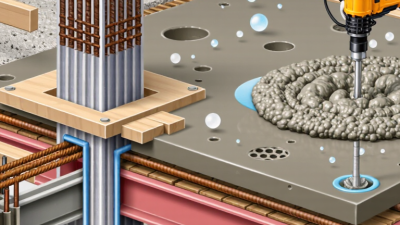
A concrete needle vibrator works by sending rapid pulses through fresh concrete, helping trapped air escape around reinforcement and corners. Typical models operate between 10,000 and 18,000 vibrations per minute (VPM). The working amplitude often ranges from 1 to 2 mm. These figures are not decoration. They affect compaction speed, surface finish, and the risk of aggregate separation.

Higher VPM is not always better. In a narrow column, excessive vibration may push coarse aggregate downward and leave a paste-rich surface. A 1 mm amplitude can suit congested reinforcement, while 2 mm may perform better in thicker slabs. In practice, operators insert the needle vertically, avoid dragging it sideways, and lift it slowly after several seconds. I have seen rushed removal leave visible voids near the formwork.

Reliable manufacturers should document shaft flexibility, needle diameter, insulation, waterproofing, noise, and hand-arm vibration data. Check the applicable edition of IEC 60745-2-12 or IEC 62841-2-12, depending on the product’s certification route. EN adaptations may apply in some markets. ISO 5349 guidance can support evaluation of hand-arm vibration exposure. Test reports should match the exact model, not a similar-looking unit. This detail is easy to miss. A useful factory inspection also measures actual VPM under load, because unloaded laboratory figures can appear impressively high.

Manufacturer Selection Criteria: Power, Shaft Length, Needle Diameter, and IP Ratings

Choosing among China’s top concrete needle manufacturers starts with matching power to the pour, not simply choosing the largest motor. ACI Committee 309’s Guide for Consolidation of Concrete (ACI 309R-05) describes internal vibrator frequencies commonly around 8,000–12,000 vibrations per minute. Check the manufacturer’s loaded operating data, since frequency can drop in stiff mixes. A unit that stalls beside a congested rebar cage wastes time. Too much vibration can also encourage segregation.

Shaft length should reach the bottom of the deepest lift while leaving room to withdraw the needle steadily. Match needle diameter to bar spacing and form size: a large head may not pass through tight reinforcement, while a small head may cover less concrete per insertion. For electrical models, compare rated power, duty cycle, voltage, and overload protection—not wattage alone. IEC 60529 defines IP ratings; an IP67 enclosure is dust-tight and tested for temporary immersion under specified conditions. That rating does not mean every connector or cable joint is equally protected.

Tips: Ask for test data under load, shaft dimensions, and the exact IP-rated component. Verify service access and spare-part availability before ordering. These checks are easy to overlook. And supplier claims still need checking.

China Top 10 Concrete Needle Manufacturers? - Manufacturer Selection Criteria: Power, Shaft Length, Needle Diameter, and IP Ratings

Anonymized benchmark profiles for screening concrete-needle vibrator specifications commonly available from Chinese manufacturers. The profiles are organized by practical performance criteria rather than by company or brand name.

Profile Rated Power Operating Voltage Shaft Length Needle Diameter Vibration Frequency Motor / Housing IP Rating Typical Use Selection Assessment
Profile 01 0.75 kW 220 V, single-phase 1.5 m 25 mm 12,000–15,000 vpm IP54 Small columns, beams, and repair work Compact and easy to handle
Profile 02 1.1 kW 220 V, single-phase 2.0 m 28 mm 12,000–15,000 vpm IP54 Residential slabs and narrow formwork Balanced entry-level option
Profile 03 1.5 kW 220 V, single-phase 3.0 m 32 mm 12,000–16,000 vpm IP55 General building construction Good all-purpose coverage
Profile 04 1.5 kW 220 V, single-phase 4.0 m 35 mm 12,000–16,000 vpm IP55 Large slabs and foundations Longer reach with moderate power
Profile 05 2.2 kW 220 V, single-phase 3.0 m 38 mm 12,000–18,000 vpm IP55/IP67* Dense reinforcement and structural concrete Strong general-purpose performance
Profile 06 2.2 kW 380 V, three-phase 4.0 m 45 mm 12,000–16,000 vpm IP55 Continuous site and infrastructure work Suitable for extended duty cycles
Profile 07 3.0 kW 380 V, three-phase 4.0 m 50 mm 12,000–16,000 vpm IP55 Foundations, walls, and bridge components High output for heavy concrete placement
Profile 08 3.0 kW 380 V, three-phase 5.0 m 50 mm 12,000–16,000 vpm IP55/IP67* Deep pours and large construction sites Long-reach heavy-duty configuration
Profile 09 4.0 kW 380 V, three-phase 6.0 m 60 mm 12,000–16,000 vpm IP55 Mass concrete and major civil works High-capacity industrial selection
Profile 10 5.5 kW 380 V, three-phase 6.0 m 70 mm 12,000–16,000 vpm IP55/IP67* Large foundations, dams, and infrastructure Maximum output for large-volume pours

Technical note: Needle diameters, shaft lengths, motor powers, and vibration frequencies shown above are representative commercial ranges used for concrete internal vibrators. IP54 provides protection against limited dust ingress and water splashes; IP55 adds protection against water jets; IP67 provides dust-tight protection and temporary immersion protection. Confirm the exact IP rating for the motor, switch, connector, and vibrating head separately before purchase.

China’s Top 10 Concrete Needle Manufacturers Compared by Capacity and Product Range

Comparing China’s top concrete needle manufacturers by capacity and product range requires more than counting machines or models. A useful assessment looks at monthly output, production consistency, and the ability to handle different project sizes. Some factories focus on compact poker vibrators for small pours, while others offer several shaft lengths, motor options, and heavy-duty units for larger sites. Ask for current production figures and sample specifications. Capacity can change with seasonal demand.

Product range matters on the job. A contractor may need a slim needle for reinforced columns, a longer shaft for deep forms, and compatible power units for continuous work. Check needle diameter, shaft length, vibration frequency, and available voltage options. Also examine how manufacturers document testing and spare-part availability. The details are practical: a worn coupling or an unsuitable cable can slow a pour. Not every catalogue tells the full story.

A fair comparison should separate stated capacity from verified output. Request recent inspection records, production lead times, and clear explanations of customization limits. Larger capacity does not automatically mean better fit; a smaller supplier may offer more flexible configurations. That distinction is easy to miss. Some specifications may also be presented inconsistently, so compare like with like and confirm figures directly before making a shortlist.

Quality Verification: ISO 9001, CE Compliance, Motor Tests, and Warranty Data

China Top 10 Concrete Needle Manufacturers?

A credible shortlist starts with documented quality controls, not marketplace rankings. ISO’s 2022 Survey recorded over 1.26 million ISO 9001 certificates worldwide. However, a certificate alone cannot prove stable vibrator performance. Check the certificate number, scope, issuing body, and validity date. Confirm that it covers manufacturing, not only trading activities. Ask for production records, incoming-material checks, and batch traceability.

CE compliance requires careful reading. The European Commission explains that CE marking is a manufacturer’s declaration of conformity, not an approval seal. Request the EU Declaration of Conformity, risk assessment, and applicable test reports. For electric motors, compare results with IEC 60034-2-1 methods. Useful data includes voltage tolerance, insulation resistance, temperature rise, vibration, noise, and running-current stability. A motor that survives a brief demonstration may still fail during continuous concrete placement. Short tests mislead.

Warranty evidence deserves equal attention. Ask for written coverage, excluded parts, response times, and spare-motor availability. Request anonymized claim rates by model and production year. Public industry reports often discuss construction-equipment reliability, but they rarely provide comparable warranty datasets for concrete needles. That gap matters. Some suppliers provide polished documents but limited field evidence. I would record this as a verification weakness, not ignore it. Inspectors should also test several units from different batches, because one excellent sample proves very little. Field feedback is useful, yet it can be incomplete.

China Concrete Needle Manufacturer Quality Verification

Anonymized verification results across 10 screened manufacturers

The chart compares the number of screened manufacturers with documented evidence for ISO 9001 certification, CE compliance, motor testing, and warranty coverage. Certification and compliance documents should be checked for validity, product scope, issuing organization, test method, and stated warranty conditions.

Applications, Pricing Factors, Export Markets, and Buyer Evaluation Checklist

China’s top ten concrete needle manufacturers should be compared by performance, not catalog position. On construction sites, needle vibrators compact columns, slabs, foundations, and precast panels. A 38 mm head suits tighter reinforcement, while larger heads cover wider pours faster. Field experience shows that vibration efficiency depends on mix design, reinforcement spacing, and operator technique.

Pricing usually reflects motor power, vibration frequency, needle diameter, flexible shaft length, and housing materials. Copper winding, sealed bearings, and reinforced cables can raise the quotation. Export costs also include packaging, inland transport, insurance, duties, and currency changes. Request a complete FOB or CIF price. A low factory price may become expensive after freight and replacement parts. That mistake is common.

Demand is strong across Southeast Asia, the Middle East, Africa, and Latin America, where contractors need portable equipment for housing and infrastructure projects. Buyers should verify output tests, insulation protection, noise levels, spare-part availability, and warranty terms. Ask for videos under load, not only empty-running demonstrations. Check production capacity, inspection records, export experience, and response times. Confirm plug standards and documentation before payment. Test one sample on the intended concrete mix when possible. Some evaluations still rely too heavily on brochures. That deserves reconsideration.